Freshwater · NT
The Northern Australia freshwater turtles are considered an important source of protein for indigenous communities, which expressed concerns about their current health and condition. In the past five years, traditional owners have expressed concerns about the health and condition of their turtles, particularly the Northern Long-necked turtle (Chelodina oblonga). There are anecdotal reports on a…
Larissa Schneider, Isabel Ely
NSW
Researchers from the Southern Cross University, in collaboration with the Coffs Harbour City Council, are conducting studies into the potential impacts of Intensive Plant Agriculture on the environment by investigating potential mercury contamination from pesticides in soil, air, water, plants and animals near farming operations. The project, funded by the Council’s Environmental Levy, will also…
Christian Sanders
History and archaeology · VIC
Figure 1- A stamp mill used by Europeans during the colonisation period in Australia during the late 80s and early 90s. This mill was used to crush material for extraction of metallic ores. Past industrial processes, including gold mining, used mercury on a regular basis. There were few attempts to control industrial waste so pollution…
Peter Davies, Susan Lawrence
Featured image: Digital autoradiographic false colour phosphor images show selenium radiotracer (75Se; SeIV) distribution in ventral sections of tadpoles at developmental stage 33, 42 and 46 (Gosner, 1960). From Lanctôt et al. 2017 (Environ. Sci. Technol. 2017, 51, 10, 5764–5773). The Australian Nuclear Science and Technology Organisation (ANSTO) is currently involved in the development and…
Tom Cresswell
Ocean · WA
This project is part of a Discovery Early Career Researcher Award (DECRA) where Dr Oscar Serrano is pioneering the use of seagrass sedimentary archives from estuaries in Australia to reconstruct the past history of coastal and terrestrial ecosystems in response to environmental forces. The Project aims to obtain long-term data series from seagrass sedimentary archives…
Oscar Serrano
Atmosphere · QLD
Sources, chemical evolution, and transport pathways of atmospheric mercury Mercury is a potent toxin that accumulates in foodwebs, with serious consequences for natural ecosystems and human health. While mercury exposure occurs primarily in ocean ecosystems, the atmosphere is the dominant pathway for mercury to spread across the globe (Figure 1). This is because mercury is…
Jenny Fisher, Peter Nelson · James Cook University
Once released into the atmosphere, mercury can travel long distances, impacting far away from its original source. And mercury pollution has a long legacy in the environment, with potentially negative consequences for ecological systems and human health. Unfortunately, we have limited information on how much and where atmospheric mercury accumulates across Australia. This is important…
Cameron Holley, Darren Sinclair
Terrestrial · TAS
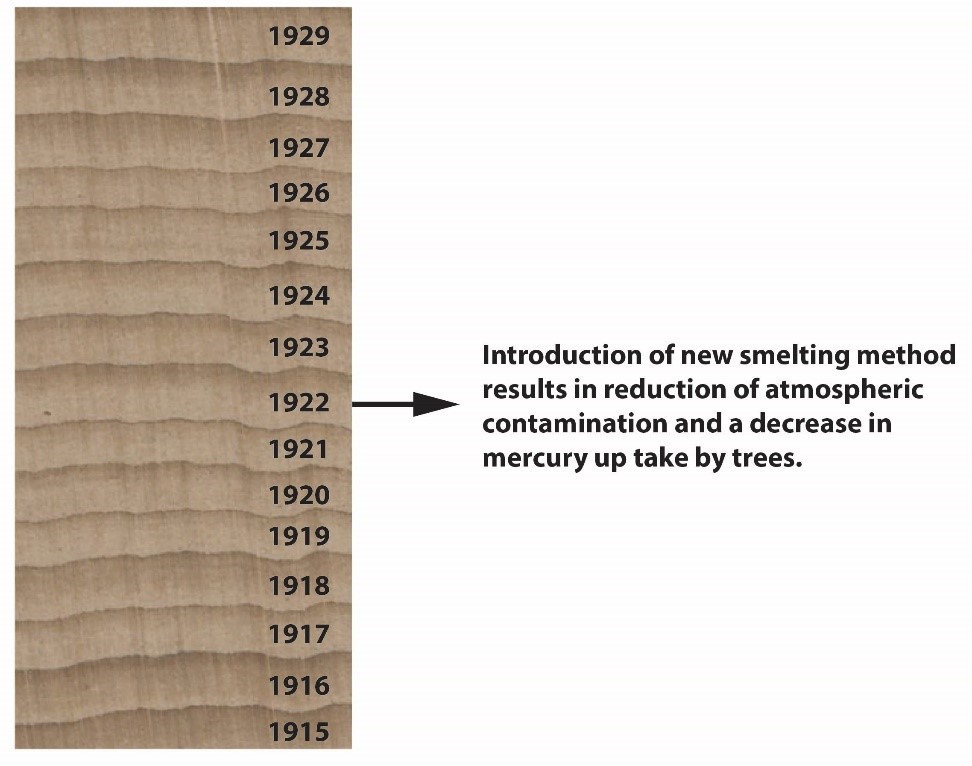
This research is the first study of Hg bioaccumulation in any Southern Hemisphere trees, the species Huon Pine (Lagarostrobos franklinii), endemic to western Tasmania, was found to be one of the most efficient bioaccumulators of mercury in the world. Essentially, the higher the mercury concentration in the atmosphere, the greater the amount of mercury taken…
Larissa Schneider, Simon Haberle
Researching mercury in Australia?
Add your project to the network so policymakers and other researchers can find it.
Propose a project