Mercury in Australia.
Where mercury comes from, where it ends up and what the record shows, drawn from more than 60 papers by network researchers at 20 institutions across Australia.
Where it comes from.
Australia stopped mining mercury as a primary commodity at least 50 years ago, but past uses and present industry still release it. Network researchers are studying each of these sources.
Gold mining legacy
Mercury was used to recover gold on colonial goldfields. Soils, creeks and sediments near old processing sites still hold it, and network researchers study how much remains and where it moves.
Coal combustion
Trace mercury in coal is released when it is burnt. Coal-fired power is the main contemporary source in Australia, and network sediment cores near major power stations trace its fingerprint.
Agriculture
Historic organomercury pesticides and fungicides, and current network research into releases from intensive plant agriculture in New South Wales.
Oil and gas
Mercury occurs in natural gas and builds up in subsea pipelines. Network researchers study what this means for marine life when offshore infrastructure is decommissioned.
Fire
Bushfires and prescribed burns release mercury stored in forests and soils, and can remobilise it at legacy mine sites. Network fire studies measure how much.
Where it ends up, and what our research shows.
Network papers sorted by environment. Choose one to read the research.
Air
Freshwater
Ocean
Soils and sediments
Wildlife
The Minamata Convention in Australia.
The global treaty to protect people and the environment from mercury. Australia is now a Party and bound by its obligations.
- 10 October 2013
Australia signs in Kumamoto, Japan
- 7 December 2021
Australia ratifies the Convention
- 7 March 2022
The Convention enters into force for Australia
Where our research is focused.
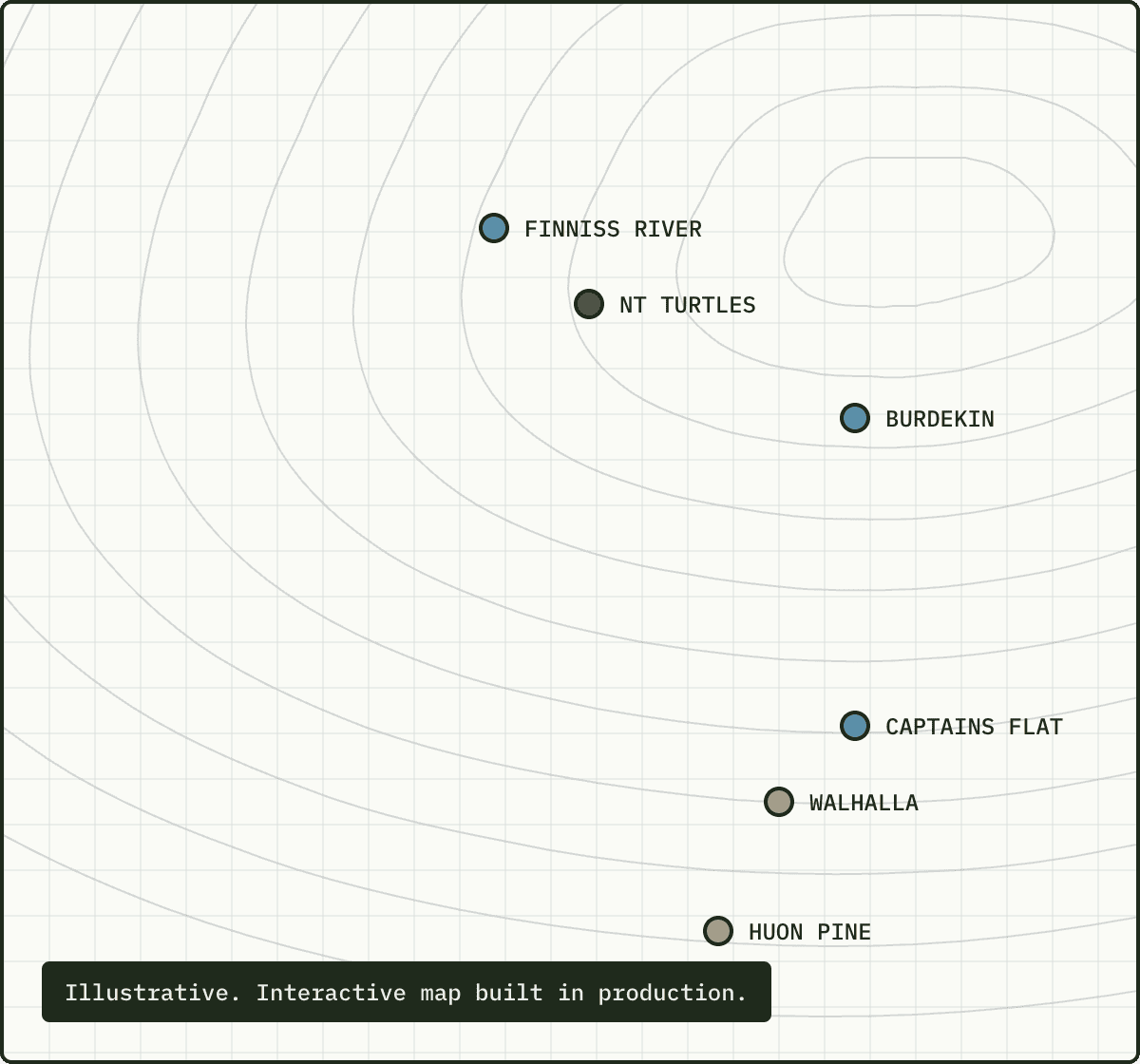
Six case studies from network research, from colonial goldfields to tropical rivers.